
Blog

Aplisens PCE-28.SMART: ±0.1% Smart Pressure Transmitter with HART
Pressure is the most measured variable in the plant — and the most taken for granted. A pressure transmitter that's "close enough" drives a control valve that's always hunting, a batch that's always slightly off, or a safety system working with numbers it can't trust. The Aplisens PCE-28.SMART exists for the engineer who's done accepting "close enough."
What ±0.1% Actually Means
On a 10 bar range, ±0.1% is ±10 millibar — about the pressure of a strong breath. Tha
…
Oct 3rd 2026
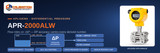
Aplisens APR-2000ALW: Smart Differential Pressure Transmitter with SIL2
Differential pressure is the hardest-working measurement in the plant. It meters flow through orifice plates and pitot tubes, watches filters load up, measures tank level from the bottom up, and derives density. And it's the measurement most people under-specify — because a DP error doesn't just add, it multiplies.
Here's why: flow from differential pressure follows a square-root relationship. A 1% error in DP becomes roughly a 0.5% error in flow — but more importantly, at low flows
…
Oct 3rd 2026
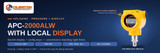
Aplisens APC-2000ALW: Smart Pressure Transmitter with Local Display
Every plant has instruments nobody can read without a pilgrimage — the transmitter behind the vessel, the one at the top of the pipe rack, the one whose reading you need right now while you're standing next to the pump. The Aplisens APC-2000ALW is built for exactly those spots: a smart pressure transmitter with a backlit local display and configuration keys, so the reading and the controls are where the work happens.
Why a Display Is Worth Paying For
A display looks like a luxury until you
…
Oct 3rd 2026

PureAire's Long-Lasting O2 Sensor: Why Their Oxygen Monitor Runs 10+ Years Without a Sensor Swap
If you manage a facility that stores nitrogen, argon, helium, or CO2, you know the weak point in most oxygen deficiency monitors: the sensor itself. Standard electrochemical O2 sensors deplete with use and typically need replacing every 1 to 2 years — plus the calibration, labor, and downtime that come with them. PureAire built their oxygen monitors around a different sensor, and it's the reason their units routinely run a decade or more on the original cell.
Here's how it works, and why i
…
Oct 2nd 2026
How Often Should Gas Detectors Be Calibrated? OSHA, Manufacturer & Best Practices
If you use gas detectors to keep your people safe, calibration isn't optional — it's the difference between a detector you can trust and one that's just making noise. But "how often" is where most people get confused, because OSHA, MSHA, and the manufacturers don't all say the exact same thing.
Here's the straight answer, plus what we recommend based on what we see every day at CPS Calibrations.
The Short Answer
Bump test: before each day's use (or daily in high-risk environments)
Full ca
…
Sep 24th 2026