
How to Store Calibration Gas Cylinders
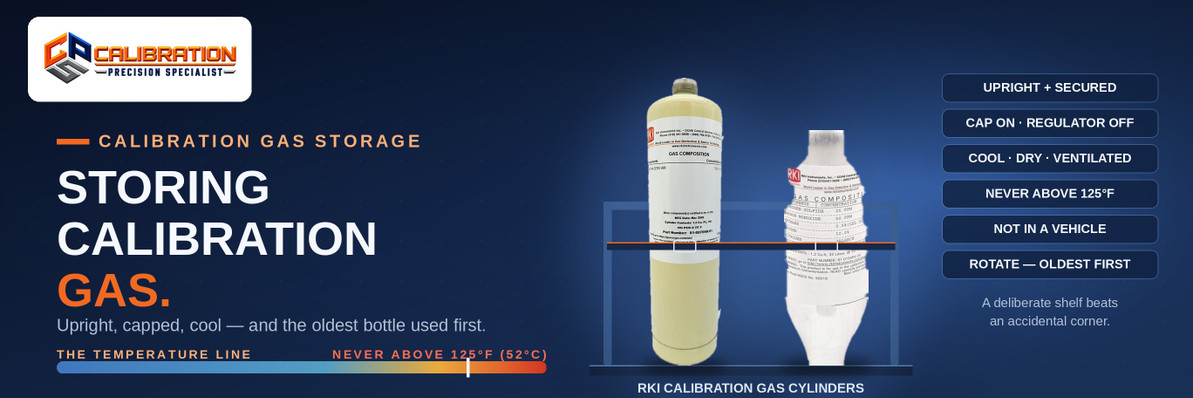
Store calibration gas cylinders upright and secured, with the valve cap on and the regulator removed, in a cool, dry, well-ventilated indoor space — never above 125°F (52°C) and never living in a vehicle. Rotate stock first in, first out, so the oldest bottle is used before its certified shelf life runs out.
That's the whole method, and the rest of this post is why each part of it matters. Calibration gas is a measuring standard: everything your detectors believe about the air around them traces back to the concentration printed on that cylinder's label. A bottle stored hot, knocked around, or left plumbed to a regulator doesn't announce that it's compromised — it just quietly stops being the standard you paid for, and every bump test and calibration downstream of it inherits the error.
Good storage isn't complicated, and it isn't expensive. It's five habits: control the temperature, keep cylinders upright and secured, keep caps on, take regulators off, and rotate stock so nothing ages out in the back.
How Hot Is Too Hot for Calibration Gas?
Heat is the fastest way to shorten a cylinder's useful life, for two separate reasons.
Pressure. Gas expands as it warms. A cylinder that sits in direct sun, next to a heater, or in a closed vehicle in summer sees its internal pressure climb well above what it reads on a mild morning. Compressed-gas guidance is consistent on the ceiling: cylinders should never be exposed to temperatures above 125°F (52°C). A truck cab or trunk on a summer afternoon can pass that line — which is why "it lives in the truck" is the single worst storage plan for calibration gas, in summer for the heat and in winter for the freeze-thaw cycling.
Chemistry. Heat also accelerates the reactions that eat reactive gases from the inside. As we covered in calibration gas shelf life, hydrogen sulfide, chlorine, ammonia, and the other reactive gases already carry certified lives of just 6–12 months at sensible storage temperatures, because their molecules adsorb onto cylinder walls and react with trace moisture. Store the same bottle hot and you spend that short life faster — the certified date assumes you didn't cook it.
Cold deserves a mention too. Very cold gas reads differently than room-temperature gas, and liquefied components in some mixes can behave inconsistently until the cylinder warms back up. The fix is simple: bring a cold cylinder indoors and let it come to room temperature before you calibrate with it. Don't calibrate with a bottle you just pulled out of a freezing truck and expect a stable span.
The target is unremarkable on purpose: a cool, dry, well-ventilated indoor space, out of direct sunlight, away from heaters, furnaces, steam lines, and corrosive chemicals — normal room conditions, held steady. A shelf or cabinet in the shop or instrument room beats the truck, the gang box, and the unheated shed every time.
Do Calibration Gas Cylinders Have to Be Stored Upright?
Yes. Calibration cylinders should be stored upright, with the valve at the top, and secured so they can't fall — chained or strapped in a rack, nested in a cylinder case, or in a stand made for the purpose. This isn't tidiness for its own sake. Three things are being protected:
- The valve. It's the weakest and most important part of the cylinder. A falling bottle that lands on its valve can shear or bend it — at best the bottle is ruined, at worst a damaged valve on a pressurized cylinder becomes a safety event, not an inventory problem.
- The contents. For mixes that contain liquefied components, upright storage keeps the liquid phase where it belongs, at the bottom, so what leaves the valve is gas at the blended concentration — not a slug of liquid that changes what the sensor sees.
- The next person. A secured bottle in a known place gets found, checked, and rotated. A bottle lying in the bottom of a job box gets forgotten — usually until it's expired.
Small disposable cylinders (17L–103L) are easy to knock over precisely because they're small. A simple rack, a divided case, or even a milk crate that keeps them upright and separated does the job. What doesn't work is loose in a drawer, a toolbox, or rolling around a truck bed.
What Does the Valve Cap Actually Protect?
Every cylinder ships with a cap or valve guard for a reason, and it should be back on any time a regulator isn't attached. The cap protects the valve threads and outlet from the two things that quietly ruin regulators and calibrations alike: mechanical damage and contamination.
Dirt, grit, moisture, and shop grime in a valve outlet end up inside your regulator, where they score sealing surfaces and create the slow leaks that drain bottles between jobs. A nicked thread does the same thing from the other direction — the regulator never quite seals, and the bottle loses gas you never used. Caps cost nothing and take two seconds. The habit to build is mechanical: regulator off, cap on, no exceptions — including "just for tonight."
One related rule from the regulator world: never use oil or grease on a cylinder valve or regulator fitting. It contaminates the gas path and, around oxygen-bearing mixes, it's a genuine fire hazard. If a fitting won't seal clean, the answer is a new seal or a different regulator — not lubricant.
Should the Regulator Stay on the Cylinder?
No — and how you store the regulator matters almost as much as how you store the bottle. Take the regulator off when you're done. A regulator left attached for weeks creates four problems at once:
- Slow leaks. Every threaded connection is a potential leak path. A bottle stored with a regulator attached — especially one whose cylinder valve was left cracked — can be empty or low the next time you reach for it, with nothing to show for the gas.
- A loaded valve. Storing with the cylinder valve open leaves the regulator pressurized the whole time, working its seals and diaphragm for no reason.
- Damage exposure. The regulator sticks out. It's the first thing hit when the bottle tips, gets moved, or has something set on it — and a bent regulator on a falling bottle is how valves get damaged.
- Cross-contamination. A regulator that lives on one bottle tends to get swapped casually onto others. Reactive gas residue in a shared regulator is how a clean bottle starts reading wrong.
The storage routine takes under a minute: close the cylinder valve, bleed the trapped gas from the regulator, unscrew it, cap the cylinder, and store the regulator somewhere clean and dry — a case, a drawer, a bag — not loose in the gang box with the wrenches.
Two regulator habits pay for themselves over time. First, dedicate regulators by gas family: the regulator that serves your 4-gas mix for your RKI GX-3R and SENKO SP-MGT fleet shouldn't be the one that serves chlorine. Second, match the material to the gas: nickel-plated brass like our C-10 fixed-flow regulator is fine for standard, non-reactive mixes, while reactive gases (H₂S, Cl₂, NH₃, HCl) belong on stainless steel, like the C-10 demand-flow in stainless — brass internals corrode under reactive gas, and a corroding regulator both leaks and contaminates. (Fixed-flow vs. demand-flow itself is a separate decision — we broke that down in fixed-flow vs. demand-flow regulators.)
Do Flammable and Toxic Gases Need to Be Stored Separately?
Calibration gas is safer than most of what's in an industrial shop, but it's still compressed gas, and some of it is flammable, toxic, or both. Sensible separation rules:
- Flammables away from oxidizers and ignition. Combustible mixes (methane, pentane, propane LEL blends) should be stored away from oxygen cylinders, open flames, heaters, and spark-producing work.
- Ventilation for toxics. Toxic calibration gases — H₂S, CO, NH₃, Cl₂ and the rest — belong in a ventilated area, not a sealed closet or an unventilated room where a slow leak could build up unnoticed.
- Away from traffic and exits. Don't store cylinders where they'll be struck by forklifts or equipment, or where they'd block an exit in an emergency.
- Read the SDS. Every mix ships with a safety data sheet that states its specific storage conditions. When the SDS and a general rule disagree, the SDS wins.
None of this requires a gas cabinet for a handful of small calibration cylinders — it requires a deliberate shelf instead of an accidental corner.
How Do You Keep Calibration Gas From Expiring on the Shelf?
Rotate it. The last habit ties storage back to accuracy: store so the oldest bottle gets used first. First in, first out. New bottles go to the back, the bottle in front is the one approaching its date, and the "best when used by" date is visible without moving anything. Add a quick pressure check to the routine — a glance at the gauge when a regulator goes on tells you whether the last storage period cost you gas — and a simple log or label habit (lot, gas, expiration) means nobody has to guess which bottle is which.
This is where storage quietly pays for itself. Most expired calibration gas wasn't bought wrong; it was stored wrong — bought in the right size, then buried behind fresher stock, left in a truck, or forgotten in a job box until its 12-month reactive clock ran out. A shelf you can see, in date order, fixes that for free.
Calibration Gas Storage: The Do / Don't List
Do:
- Store indoors — cool, dry, ventilated, out of direct sun, away from heaters
- Keep cylinders upright and secured — rack, strap, chain, or case, valve up
- Put the valve cap on whenever a regulator isn't attached
- Remove the regulator for storage, and store it clean and dry
- Dedicate regulators by gas family — stainless steel for reactive gases, brass for non-reactive
- Rotate first in, first out, with expiration dates visible
- Let cold cylinders warm to room temperature before calibrating
Don't:
- Never expose cylinders to temperatures above 125°F (52°C)
- Don't store gas in a vehicle for anything longer than the job itself
- Never use oil or grease on a cylinder valve or regulator fitting
- Don't leave cylinders loose where they can tip, roll, or be struck
- Don't store flammable mixes near oxygen or ignition sources, or toxics in unventilated spaces
The Calibration Angle
On our benches, the gas is treated like the standard it is: stored indoors, upright, capped, dated, and rotated, with regulators matched to each gas family and removed between jobs — because a certificate is only as honest as the gas lot behind it. Every instrument that comes through our lab — gas detection and process instruments alike, temperature, flow, pressure, and gas — is challenged with gas that's inside its certified life and stored the way the manufacturer intended. We calibrate every channel, and we prove it on paper.
If your gas shelf looks more like a job box than a shelf, that's fixable in an afternoon — and if you're not sure which of your bottles are still trustworthy, call us at 865-900-8844 and we'll help you sort them. Ship your instruments to our lab or have us come to your facility.
The Bottom Line
Calibration gas stays certified only if storage lets it. Keep it cool and dry — never above 125°F and never living in a vehicle — upright and secured with the cap on, and take the regulator off when the work is done, storing it clean, dry, and dedicated to its gas family. Separate flammables from oxygen, ventilate the toxics, and rotate oldest-first so nothing expires in the back. None of it costs anything but attention — and it's the difference between a standard you can defend and a bottle you're merely hoping is still right.
Stocking up? Browse calibration gas — multi-gas mixes for standard fleets and single-gas bottles for specialty channels — plus fixed-flow and demand-flow regulators. Need your fleet verified? Ship your instruments to our lab or have us come to your facility — gas detection and process instruments alike.
Frequently Asked Questions
What temperature should calibration gas be stored at? Normal indoor conditions — cool, dry, and out of direct sunlight. The hard ceiling is 125°F (52°C): cylinders should never be exposed to temperatures above that, which rules out closed vehicles, trunks, and spots next to heaters or in direct sun. Very cold cylinders should be allowed to warm to room temperature before you calibrate with them.
Can I store calibration gas in my truck? For transport to a job, yes. As its home, no. A vehicle bakes in summer — easily passing the 125°F ceiling — and cycles through freezing temperatures in winter. Both extremes spend the gas's certified life faster and can make readings unstable until the cylinder returns to room temperature. Store it indoors; carry it out for the job.
Should calibration gas cylinders be stored upright or on their side? Upright, valve at the top, and secured against falling. Upright storage protects the valve — the cylinder's most vulnerable part — and keeps any liquefied components in a mix settled at the bottom so the gas leaving the valve is at its blended concentration. Secure small cylinders in a rack, strap, or case; don't leave them loose where they can tip or roll.
Should I leave the regulator attached to the cylinder? No. For storage, close the cylinder valve, bleed the pressure from the regulator, remove it, and put the cylinder cap on. A regulator left attached is a slow-leak path that can drain the bottle, keeps the regulator pressurized for no reason, sticks out where it can be damaged, and invites cross-contamination when it's swapped between gases. Removal takes under a minute.
Can one regulator be used for every calibration gas? It shouldn't be. Dedicate regulators by gas family, and match the material to the gas: nickel-plated brass is fine for non-reactive mixes, but reactive gases — H₂S, Cl₂, NH₃, HCl — need stainless steel, because they corrode brass internals. A corroding regulator leaks and contaminates the gas path, which defeats the point of a certified standard.
Does storage affect calibration gas shelf life? Yes. The certified shelf life — roughly 36 months for stable gases and 6–12 months for reactive gases — assumes sensible storage. Heat, moisture, contamination from an uncapped valve, and a regulator left attached all spend that life faster. Cool, dry, capped, and rotated oldest-first is how a bottle actually reaches the date on its label. See our post on calibration gas shelf life for the full breakdown by gas.
CPS Calibrations · 109 S. Front Street, Rockwood, TN 37854 · Portable Gas Detection · Calibration Gas · Calibration Services · Contact Us
Recent Posts
-

Why Does Gas Detector Data Logging Matter? The Paper Trail Your Incidents Need
Gas detector data logging matters because it is the only objective record of an incident: a data-log …Oct 22nd 2026 -

What Is a Confined Space? OSHA's Definition, the 3 Tests, and When It Becomes Permit-Required
A confined space is a space that passes all three of OSHA's tests at the same time: it is large enou …Oct 21st 2026 -

PID vs. LEL for VOC Detection: Which Sensor Do You Actually Need?
Use a PID to detect VOCs and an LEL sensor to detect explosive atmospheres — they measure different …Oct 21st 2026