
RKI SDM-6100 and SDM-Force Calibration Stations
The RKI SDM-6100 is a single-module docking station that bump tests, calibrates, and charges the GX-6100, storing calibration and event data to its included flash drive, in configurations from $2,020 to $2,885; the SDM-Force does the same job for the GX-Force 4-gas monitor at $1,645–$2,430 with 1 or 2 gas inlets — and both sit in a family with the SDM-3R for the GX-3R and GX-3R Pro at $1,352–$2,695, which links up to 10 modules for fleet throughput.
The configuration menus tell you what stations actually vary by. The SDM-6100 comes as the base station, a demand-flow-regulator version, or a complete kit with calibration gas cylinder and holder. The SDM-Force varies by gas inlets (1 or 2 solenoids), regulators included or not, and full kits with a 4-gas cylinder and holder. Read those menus as a checklist of what your shop already owns: a fleet that already has documented gas and demand-flow regulators buys the leaner build; a fleet starting from zero buys the kit.
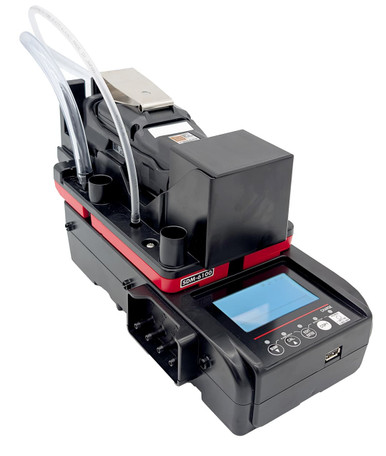
RKI SDM-6100 Calibration Station for GX-6100
Single-module dock that bump tests, calibrates, and charges the GX-6100, with records to flash drive.
$2,020–$2,885 configured
See the SDM-6100What Exactly Does a Station Automate?
- Bump test and calibration — the gas application sequence runs the same way for every instrument, with per-sensor pass/fail instead of a technician's judgment call at 4:45 PM.
- Charging — the instrument charges while docked, so the station visit returns a ready instrument, not a calibrated one with a flat battery.
- Records — the SDM-6100 stores calibration and event data to its included flash drive; the SDM-3R stores records transferable by USB and, in PC-managed fleets, through RKI's docking-station software.
That third item is the one that pays in an audit. A shelf of hand-calibrated meters has whatever paperwork habits the crew had that month. A station produces the record as a byproduct of the work.
SDM-6100, SDM-Force, or SDM-3R — Which Dock Fits Which Fleet?
The dock follows the instrument, not the other way round: SDM-6100 for GX-6100 fleets, SDM-Force for GX-Force fleets, SDM-3R for GX-3R and GX-3R Pro fleets. Mixed fleets need the dock for each model they run — stations are model-specific by design, because the cradle, the gas sequence, and the instrument communication all are.
Within a model, the differentiators are inlets and scale. The SDM-Force's 1- vs 2-inlet choice follows how many distinct gases its GX-Force calibrations need plumbed at once. The SDM-3R scales hardest: up to 10 modules connect together, and stations can be manifolded to share cylinders and regulators — the architecture for a wall of GX-3Rs cycling through a morning. The SDM-6100, as a single-module station for a premium 6-gas instrument, fits fleets where each 6100 is a significant asset serviced one at a time, thoroughly.
The Fleet-Size Math, Honestly
A station is capital; hand calibration is labor. The crossover is instruments-per-calibration-event multiplied by events per year. A handful of meters calibrated twice a year will take a long time to pay back a $2,020–$2,885 station in labor alone — those fleets often do better mailing meters to a bench like ours ($90 multi-gas in-house) or hand-calibrating with documented gas. A fleet that cycles dozens of instruments monthly pays the station back in technician hours quickly, and the records consistency arrives free.
The middle case is the honest one to think about: if calibration day currently means a technician, a cylinder, and a clipboard for half a day every month, price that half-day honestly — labor, gas, and the records risk — against the station configurations above. CPS sells the stations and runs a calibration bench, so we will give you the same answer either way: call 865-900-8844 with your fleet count and interval, and we will do the math out loud.
Frequently Asked Questions
How much do the RKI calibration stations cost?
SDM-6100: $2,020–$2,885 (6 configurations). SDM-Force: $1,645–$2,430 (8 configurations). SDM-3R for GX-3R fleets: $1,352–$2,695 (16 configurations). Kits that include regulators and gas cylinders sit at the higher ends of each range.
What does the SDM-6100 do?
It bump tests, calibrates, and charges the RKI GX-6100 in a single-module dock, and stores calibration and event data to the included flash drive. Configurations include the base station, a demand-flow-regulator version, and a complete kit with gas cylinder and holder.
What does the SDM-Force do differently?
It is the GX-Force's station: docking, bump, calibration, and charging for the GX-Force 4-gas monitor, in builds with 1 or 2 gas inlets (solenoids), with or without demand-flow regulators, and as complete kits with a 4-gas cylinder and holder.
Can I use one station for GX-3R, GX-Force, and GX-6100 fleets?
No — stations are model-specific. GX-3R and GX-3R Pro use the SDM-3R, GX-Force uses the SDM-Force, and GX-6100 uses the SDM-6100. A mixed fleet needs the dock for each model it runs.
How many SDM-3R stations can link together?
Up to 10 SDM-3R modules can be connected and managed with RKI docking-station software, and stations can be manifolded to share calibration-gas cylinders and demand-flow regulators — the setup for large GX-3R fleets.
Do the stations keep calibration records?
Yes. The SDM-6100 stores calibration and event data to its included flash drive. The SDM-3R stores bump, calibration, and alarm-check records transferable by USB flash drive or PC. Records are a byproduct of the dock cycle, not extra paperwork.
Does a station replace calibration gas?
No — it consumes it, on schedule and by the book. Stations need documented calibration gas connected (kits include a cylinder and holder; leaner builds assume you already own gas and regulators). The gas's Certificate of Analysis remains part of your record either way.
Station or mail-in calibration — which is cheaper?
Depends on fleet size and interval. Small fleets calibrated twice a year rarely pay back a $1,645–$2,885 station against a $90-per-meter mail-in bench rate. Fleets cycling many instruments monthly usually do — in labor alone, before counting records consistency. CPS does both; we will run your numbers honestly.
Do stations bump test as well as calibrate?
Yes — bump testing is a core station function on all three docks, with per-sensor pass/fail results recorded. The SDM-3R also performs automated alarm checks.
What should I buy if I already own regulators and gas?
The leaner station configuration. The menus are explicit about what each part number includes — solenoids and gas inlets, regulators, cylinders, accessories — so a shop already equipped for hand calibration should not pay twice for the kit version.
The Bottom Line
Buy the dock that matches the fleet you actually run: SDM-6100 ($2,020–$2,885) for GX-6100s, SDM-Force ($1,645–$2,430) for GX-Forces, SDM-3R ($1,352–$2,695, linkable to 10) for GX-3R fleets — and buy it when your calibration volume makes a technician's half-day the more expensive option. Below that volume, the same discipline is available per meter at the bench.
Need a calibration you can file?
In-house calibration at CPS in Rockwood, Tennessee — $55 for single-gas instruments, $90 for 4- and 5-gas — every channel, as-found and as-left data, full certificate.
See Calibration Servicesor call 865-900-8844
Recent Posts
-

What Is Remote Monitoring for Fixed Gas Detection?
Remote monitoring for fixed gas detection means a fixed system's live readings, trends, and alarm hi …Nov 23rd 2026 -

What Are the Key Differences Between the GX-6000 and GX-6100?
The RKI GX-6100 is the current replacement for the discontinued GX-6000: both are pumped 6-gas monit …Nov 22nd 2026 -

How to Read a PID Correction Factor Chart
To read a PID correction factor chart, find your vapor’s row, take the factor under your own lamp en …Nov 21st 2026