
Blog

What Does a PID Actually Measure? The SENKO V-PRO for VOC Monitoring
A PID (photoionization detector) measures total volatile organic compounds (VOCs) in the air, in real time, at parts-per-million and parts-per-billion levels a standard 4-gas monitor cannot see. The SENKO V-PRO is a portable PID with a 10.6 eV lamp and a built-in pump, offered in a 0–4,000 ppm configuration with 0.1 ppm resolution ($3,947) and a high-sensitivity 0–40 ppm configuration with 1 ppb resolution ($5,011), in an IP68 housing, with up to 60 hours of runtime on its rechargeab
…
Oct 18th 2026

Where Should Fixed Gas Detectors Be Placed? Mounting Heights and Placement Rules
Mount fixed gas detectors where the gas goes first: hydrogen and methane, which are lighter than air, on or within inches of the ceiling; heavy combustible vapors such as propane and gasoline about 6 inches above the floor; and toxic gases measured in ppm — carbon monoxide, hydrogen sulfide, chlorine, and oxygen — in the breathing zone, 4 to 6 feet above the floor, as close as practical to the likely leak source. In a large open area, space point detectors roughly 30 to 40 feet apart
…
Oct 18th 2026
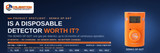
SENKO SP-SGT: Is a Disposable Single-Gas Detector Worth It?
The SENKO SP-SGT is a disposable, diffusion-type single-gas detector with an electrochemical sensor that runs continuously for up to 24 months with no sensor or battery replacement, in seven gas configurations — O₂ (0–30% vol), CO (0–500 ppm), H₂S (0–100 ppm), H₂ (0–1,000 ppm), SO₂ (0–50 ppm), NH₃ (0–100 ppm), and NO₂ (0–20 ppm) — priced from $163 to $412. It's IP67-rated, weighs 3.28 oz (93 g) in toxic-gas configurations, alarms at 90 dB wit
…
Oct 18th 2026

OEM vs. Aftermarket Gas Detector Sensors: What Are You Really Buying?
An OEM gas detector sensor is the exact sensor the instrument manufacturer specified, tested, and certified for that model — such as RKI's NCR-6309 catalytic LEL sensor ($160) and ESR-X13P-OXY oxygen sensor ($160) for the GX-3R family, or SENKO's electrochemical replacement sensors ($121) for the SGT-P and MGT lines. An aftermarket "compatible" sensor may fit the socket and pass a calibration on day one, but calibration cannot correct a different cross-sensitivity profile, response time, o
…
Oct 17th 2026

Disposable vs. Refillable Calibration Gas Cylinders: Which Costs Less?
Neither wins for everyone: disposable (DOT-39) calibration gas cylinders are cheaper to buy — a 34L single-gas bottle typically runs $60–$150 — but carry the highest cost per liter, while refillable (DOT-3AL) cylinders cost several times more up front and then refill at a fraction of a new cylinder's price. Burn rate decides it: if you go through a cylinder a month or faster, refillables usually cost less; if a bottle lasts you months, disposables do.
Set a disposable 58L cylin
…
Oct 16th 2026