
CGA-600 vs C-10: Which Regulator Fitting Does Your Calibration Gas Cylinder Need?
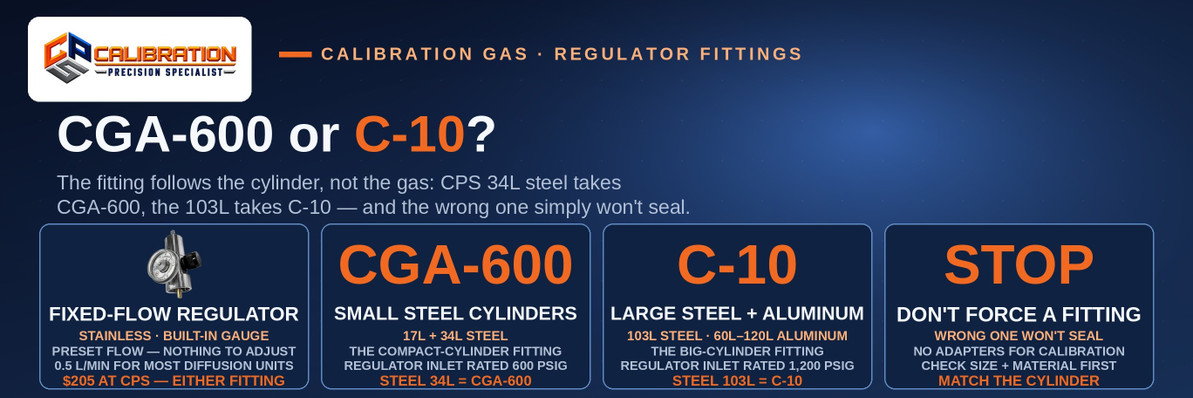
On CPS steel calibration gas cylinders, the fitting follows the cylinder: the 17L and 34L steel cylinders take a CGA-600 regulator, and the 103L steel cylinder takes a C-10 regulator. The two are different connection families — a regulator built for one will not screw down and seal on the other — so the cylinder in your hand, not the gas inside it, decides which regulator you need.
It happens on a schedule: a crew reorders the same 4-gas mix they have always used, the new cylinder arrives in a different size or material than the last one, and at the calibration bench the regulator on the shelf will not go on. Nothing is defective. Both fittings are common, both are correct — on different cylinders. This post is the map: which CPS cylinders wear which fitting, why the same gas comes on two connections, what goes wrong when you force a mismatch, and how to check before the next order.
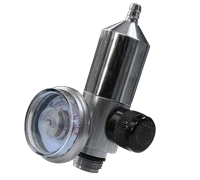
CGA-600 Fixed Flow Calibration Gas Regulator – Stainless Steel
CGA-600 or C-10? CPS steel 17L and 34L cylinders take CGA-600; the 103L takes C-10. How the fittings differ and how to check your cylinder before ordering.
$205
See the CGA-600The Two Fittings at a Glance
| CGA-600 | C-10 | |
|---|---|---|
| CPS cylinders | 17L and 34L steel | 103L steel; 60L, 66L, and 120L aluminum |
| Stainless fixed-flow regulator inlet rating | 600 PSIG max | 1,200 PSIG max |
| Fixed-flow rates stocked at CPS | 0.1–6.0 L/min (8 rates) | 0.1–6.0 L/min (9 rates, incl. 0.75) |
| Flow types available | Fixed-flow and demand-flow | Fixed-flow and demand-flow |
| Stainless fixed-flow regulator at CPS | $205 | $205 |
The two listings behind those numbers: the CGA-600 fixed-flow regulator in stainless steel and the C-10 fixed-flow regulator in stainless steel, with the full range — both fittings, both flow types, stainless and nickel-plated brass — under calibration gas regulators. The inlet ratings in the table are the regulators' own published specifications, and they follow the cylinders: the larger, higher-pressure bottles pair with the higher-rated connection.
Why the Same Gas Comes on Two Different Fittings
The fitting is not a property of the gas — it is part of the cylinder's valve, and cylinders are built in families. Small steel cylinders are built on the CGA-600 connection; large steel cylinders and the aluminum range are built on C-10. Cylinder connections are standardized by family precisely so that a regulator physically matches the class of cylinder it was made for, instead of "close enough" being a category.
The practical consequence surprises people: the gas does not decide the fitting; the bottle does. The same 4-gas mix — H₂S 25 ppm / CO 50 ppm / methane 50% LEL / O₂ 12% — is sold on a 34L steel cylinder (CGA-600), a 34L aluminum cylinder (C-10), and a 103L steel cylinder (C-10). Switch sizes or materials between orders and the regulator question reopens, even though the gas inside is identical.
Which leads to the trap inside the trap:
- Liters alone do not tell you the fitting — material does. A 34L steel cylinder and a 34L aluminum cylinder take different regulators. "34L" is only half the answer; "34L steel" is the answer.
- The 11L exception: CPS 11L aluminum cylinders do not use a threaded regulator at all — they carry a trigger valve (and are sold in a minimum quantity of six). If your regulator will not fit an 11L, that is because there is nothing for it to fit.
For the full rundown of cylinder sizes themselves — how long each one lasts and which jobs each fits — see calibration gas cylinder sizes.
What Happens When the Regulator Doesn't Match
Nothing dramatic, and that is the problem — it fails quietly:
- It will not seal. A CGA-600 regulator on a C-10 valve (or the reverse) will not screw down and seat the way its own family does. The connection feels wrong because it is wrong.
- Forcing it damages both sides. Cross-threading chews up the valve and the regulator inlet, and a damaged connection leaks even on the correct pairing afterward. A $205 regulator and a cylinder valve are both more expensive than the patience to stop.
- A leaking or improvised connection corrupts the calibration. Gas escaping at the valve is gas not flowing through the instrument at the regulator's rated flow. Bump tests and calibrations performed on starved, erratic, or leaking delivery produce adjustments you cannot trust — performed with expensive gas you are literally venting.
- Adapters are not the fix. Stacking an adapter between cylinder and regulator adds an unmeasured leak path to the one job where delivery integrity is the entire point. Calibration deserves the correct connection, bought once: the stainless fixed-flow regulator is $205 in either fitting, and it fits every cylinder in its family from then on.
If the regulator in your hand will not go on smoothly by hand, the answer is never more force. The answer is the cylinder check below.
Fitting First, Then Flow: Fixed-Flow vs Demand-Flow
The fitting is only the first of two decisions, and they are made in this order — connection first (this post), flow type second:
- Diffusion instruments — most personal multi-gas monitors drawing gas across their sensors by diffusion — pair with a fixed-flow regulator, which delivers gas at one preset rate. 0.5 L/min is the standard choice and the flow most diffusion calibrations call for; CPS fixed-flow regulators in both fittings run from 0.1 to 6.0 L/min for instruments with other requirements.
- Pumped instruments and sample-draw setups pair with a demand-flow regulator, which feeds gas as the instrument's pump draws it instead of pushing a constant stream against the pump. Both CGA-600 and C-10 are available in demand-flow versions at CPS.
The flow decision has its own failure modes — starved pumps, flooded diffusion caps, wasted gas — and its own full treatment in fixed-flow vs demand-flow regulators. Get the fitting wrong and none of it matters, because the gas never reaches the instrument in the first place.
One more variable while you are choosing: each fitting is sold in nickel-plated brass and stainless steel. The product pages spell out the intended use for each build — the C-10 stainless listing, for example, is the one specified for reactive gas mixtures — so if you run reactive gases (H₂S, SO₂, chlorine, ammonia), check the listing or ask us rather than assuming the materials are interchangeable.
How to Check Your Cylinder Before You Order
- Read the cylinder, not your memory of the last order. Size and material are printed in the product name and on the label. "34L steel" and "34L aluminum" are different answers — say the whole thing.
- Check the connection line on the product page. Every CPS gas listing states the connection for each size it offers: 17L steel — CGA-600; 34L steel — CGA-600; 103L steel — C-10; 60L, 66L, and 120L aluminum — C-10; 11L aluminum — trigger valve. Those listings also carry the cylinder's documentation line — NIST-traceable, with the cylinder-specific SDS and COA behind the QR code; what NIST-traceable calibration gas actually means is worth two minutes before your next audit.
- Interrogate the regulator you already own. Its connection is in its product name — CGA-600 or C-10. "It fit the last cylinder" is only useful evidence if the new cylinder is the same size and the same material from the same family.
- Re-ask the question whenever anything about the cylinder changes. New size, new material, new supplier, new gas program — any of them can change the fitting while the gas itself stays exactly the same.
- Still unsure? Call before it ships. Tell us the cylinder size and material and the instrument you are calibrating — 865-900-8844 — and we will match the regulator to the bottle before anything leaves. And if you are not sure which gas the instrument needs in the first place, the Calibration Gas Finder answers that by detector model.
Frequently Asked Questions
What regulator fitting does a 34L calibration gas cylinder use?
It depends on the material, which is exactly the trap: a 34L steel cylinder from CPS takes a CGA-600 regulator, while a 34L aluminum cylinder takes C-10. Same size, same gas options, different connections. Check whether your 34L is steel or aluminum before ordering a regulator — or before assuming the regulator you already own will fit.
What regulator does a 103L calibration gas cylinder need?
A C-10 regulator. The CPS 103L steel cylinder is built on the C-10 connection, in both fixed-flow and demand-flow versions. A CGA-600 regulator — the one that fits the smaller 17L and 34L steel cylinders — will not seal on it.
Are CGA-600 and C-10 regulators interchangeable?
No. They are different connection families with different cylinder valves: a regulator built for one will not screw down and seal on the other. They overlap in everything else — both come in fixed-flow and demand-flow versions, in stainless steel and nickel-plated brass, and the stainless fixed-flow model costs $205 in either fitting at CPS — but the connection itself does not cross over.
Can I use an adapter to fit a CGA-600 regulator on a C-10 cylinder?
It is the wrong fix for calibration work. An adapter stack adds connections that can leak between the cylinder and the regulator, and a calibration or bump test performed through a leaking, improvised delivery path cannot be trusted — the instrument may be adjusted against less gas than the procedure assumes. The correct regulator is a one-time $205 purchase that fits every cylinder in the family; an adapter saves nothing and puts the calibration itself in question.
How can I tell which fitting my cylinder has?
Three checks, in order: read the cylinder itself — size and material are in the product name and on the label (17L/34L steel = CGA-600; 103L steel and 60L/66L/120L aluminum = C-10); check the connection stated on the cylinder's product page, where every CPS gas listing names it per size; and check the regulator you already own, whose connection is in its product name. If the three disagree with your expectation, the cylinder in your hand wins.
Does the type of gas determine which fitting I need?
No — the cylinder determines the fitting. The identical gas mix is sold on cylinders with both connections: a standard 4-gas mix, for example, comes on a 34L steel cylinder (CGA-600), a 34L aluminum cylinder (C-10), and a 103L steel cylinder (C-10). Gas type matters to other choices — regulator material for reactive mixes, for instance — but the connection belongs to the bottle.
Do CGA-600 and C-10 regulators come in both fixed-flow and demand-flow?
Yes, both fittings are available in both flow types at CPS. Fixed-flow regulators deliver a preset rate (0.5 L/min is standard for diffusion instruments) and suit diffusion monitors and calibration caps; demand-flow regulators feed gas as a pumped instrument draws it and suit pumped monitors and sample-draw setups. Decide the fitting from the cylinder first, then the flow type from the instrument.
What flow rate should I choose for my regulator?
For most diffusion-style personal monitors, 0.5 L/min fixed-flow is the standard the instrument makers specify, and it is the most common regulator we sell in both fittings. CPS fixed-flow regulators run 0.1 to 6.0 L/min — the CGA-600 in eight rates, the C-10 in nine (it adds 0.75) — for instruments and docking setups with different requirements. Pumped instruments generally should not use fixed-flow at all; they need a demand-flow regulator matched to the same fitting.
Why won't my regulator tighten onto my new cylinder?
Almost always because the cylinder changed families: the new bottle is a different size or material than the one your regulator was bought for — the classic case is a 34L aluminum cylinder (C-10) arriving where a 34L steel cylinder (CGA-600) used to be. Stop rather than force it: cross-threading damages the valve and the regulator, and a damaged connection leaks even on a correct pairing later. Confirm the new cylinder's size and material, then get the regulator that matches it.
What fitting does an 11L calibration gas cylinder use?
Neither — the CPS 11L aluminum cylinder has a trigger valve instead of a threaded connection, so no screw-on regulator is used with it at all. It is the one cylinder in the range where the CGA-600 vs C-10 question does not apply. Note the 11L cylinders are sold in a minimum quantity of six.
The Bottom Line
The fitting follows the cylinder: CPS steel 17L and 34L cylinders take CGA-600, the steel 103L and the aluminum range take C-10, and the 11L aluminum skips threads entirely for a trigger valve. The gas inside never enters into it — which is why the same mix can arrive on a bottle your regulator does not fit. Read size and material before you order, never force a connection that will not seat by hand, and buy the correct regulator once: at $205 in stainless, in either fitting, it is the cheapest calibration insurance in the cabinet.
Need the regulator that matches your cylinder — or not sure which cylinder you have? Call 865-900-8844 or reach us through Contact Us. Browse calibration gas regulators and calibration gas, or hand the whole job to our calibration services — we calibrate every channel, with the right gas on the right fitting.
CPS Calibrations · 109 S. Front Street, Rockwood, TN 37854 · Calibration Gas · Calibration Services · Contact Us
Need a calibration you can file?
In-house calibration at CPS in Rockwood, Tennessee — $55 for single-gas instruments, $90 for 4- and 5-gas — every channel, as-found and as-left data, full certificate.
See Calibration Servicesor call 865-900-8844
Recent Posts
-
Can You Add a Pump to a SENKO SGT-P or MGT?
Yes — SENKO's SP-Pump101 external sampling pump ($330, part AAA006000) fits the SGT, SGT-P, and MGT, …Nov 12th 2026 -

What Refrigerant Detection Does a Grocery Store Need?
A grocery store needs refrigerant detection in three places: low-mounted carbon dioxide (R-744) sens …Nov 11th 2026 -

What Is LEL and UEL? The Explosive Range, Gas by Gas
The LEL is the lowest concentration of a gas in air that can explode, and the UEL is the highest: me …Nov 10th 2026