
SENSIT Calibration Service: Mail In Your Leak Detector
Mail-in calibration for a SENSIT leak detector at CPS Calibrations covers the combustible channel verified in PPM, LEL, and percent volume as configured — the GOLD G2 (configured $1,440.80–$3,002.20) can display up to four gases at once, adding oxygen, carbon monoxide, and hydrogen sulfide channels that are each spanned on their documented gas — with as-found readings recorded before any adjustment, a sensor health check on the internal pump and sample path, and the instrument returned with a certificate showing as-found and as-left data and a Certificate of Analysis link for each calibration gas bottle used. One honest note on price: SENSIT leak instruments are not covered by a published flat rate here, so your rate is confirmed when the service is booked — call 865-900-8844 before you ship to 109 S. Front Street, Rockwood, TN 37854.
A leak detector earns its keep at the bottom of its range. The confined-space channels matter, but the reason a GOLD G2 rides in the truck is the PPM-scale combustible reading that finds a leak while it is still small — and a combustible sensor that has drifted at the low end does not announce itself. It just reports a smaller leak than the one that is there, or none at all. Verification at the low end is therefore not a formality on these instruments; it is the calibration.
This post is the service page for SENSIT leak instruments at CPS: the SENSIT GOLD G2 family and the HXG leak line, what the bench verifies channel by channel, what gets checked around the calibration, and what comes back in the box. CPS sells and calibrates SENSIT, so unlike a serviced brand there is a store record behind everything stated here — and where there is no published figure, this post says so instead of borrowing one.
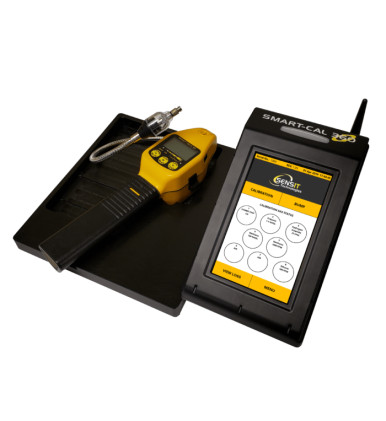
SENSIT GOLD G2
Leak detection and confined-space instrument — combustible in PPM, LEL, and percent volume, up to 4 gases displayed.
$1,440.80–$3,002.20 configured
See the GOLD G2What Does a SENSIT Leak Detector Calibration Verify?
Start with the combustible channel, in every scale the instrument carries. The GOLD G2 reads combustible gas in PPM, in LEL, and in percent volume as configured — three scales with three different jobs: PPM for finding and sizing leaks, LEL for the safety decision, percent volume for inert and purge work where oxygen is absent. A verification that only exercises one scale has left the other two — including the leak-finding scale the instrument exists for — unchecked. The bench verifies the combustible channel across the scales the instrument is configured with, against documented gas, and records the as-found readings before anything is adjusted.
Then the fitted personal-protection channels, each spanned on its own documented gas and reported in its own units:
- Oxygen (O₂), where fitted. The channel that catches deficient and enriched air during confined-space and inert work; its as-found figure shows how far it had drifted.
- Carbon monoxide (CO), where fitted. The investigation channel — the reading a CO call stands or falls on.
- Hydrogen sulfide (H₂S), where fitted. The fast toxic channel, verified beside the others so one certificate tells the instrument's whole story.
- Hydrogen cyanide (HCN), where fitted. An optional channel on the GOLD G2 — fitted is the operative word: the bench calibrates the channels your instrument actually carries, as configured.
The HXG leak instruments get the same discipline on a simpler brief: the SENSIT HXG-3 reads combustible gas in PPM and LEL on a low-power semiconductor sensor (configured $1,082.40–$1,324.20), and its verification covers both scales — because on a leak-only instrument, the low PPM end is not one scale among several; it is the product.
The Pump, the Probe, and the Sensor Health Check
These are pumped instruments — the GOLD G2 samples through an internal pump — and on leak work the sample path is part of the measurement. A weak pump, a cracked probe, or a clogged filter stretches response time exactly when the technician is sweeping a joint and expecting the reading to climb as the probe passes the leak. A slow instrument smears that peak and can walk a crew past the leak they were sent to find. Send the probe you actually survey with, and the bench treats the sample path as part of the instrument: draw checked, filters inspected.
Around the calibration sits the sensor health check. Calibration answers whether the instrument reads correctly against known gas today; the health check answers whether anything is heading for trouble — a combustible sensor that is sluggish at the low end, a toxic channel at the edge of its range. If a sensor is spent or failing, you hear it in a specific form: a written quote before any work, with the choice yours. A calibration booking is never a blank check.
What Comes Back in the Box
Your SENSIT instrument, calibrated — and its documentation. The certificate is the CPS standard, one tier with the full breakdown: as-found and as-left readings for every channel as configured, and the gas trail behind them — when a calibration gas bottle enters service at CPS, the supplier QR code on it is scanned and its Certificate of Analysis link is stored on the bottle's record, and the certificate carries a clickable CoA link for each bottle used on your instrument. The instrument is checked in and tracked against its serial number from arrival to return, and its record joins the CPS Calibration Program: its history builds calibration by calibration behind one fleet history link, and a due-date reminder email arrives before the next calibration comes due. No contract, no monthly fee.
Send the instrument, its batteries or charger, and the probe you survey with; include a note with your company name, a contact, and the instrument's serial number. Do not send calibration gas cylinders — we calibrate with our own documented gas. Return shipping is the customer's cost, arranged when the service is booked. The general ship-in process, for any instrument, is in how mail-in gas detector calibration works, and our calibration services page covers the wider bench. You can also start with the ship-in calibration and repair request.
Frequently Asked Questions
How much does it cost to calibrate a SENSIT leak detector?
Honestly: there is no published SENSIT-specific flat rate, and this post will not invent one. Your rate is confirmed when the service is booked — call 865-900-8844, name the model and its configuration, and you will have the figure before the instrument ships. What is fixed is the shape of the deal: the confirmed rate covers the calibration as configured, shipping is separate in both directions, and any sensor or repair work beyond calibration is quoted in writing before it is done.
What does a SENSIT calibration include?
Verification and calibration of every channel the instrument carries as configured — the combustible channel in PPM, LEL, and percent volume as configured, plus the fitted oxygen, carbon monoxide, hydrogen sulfide, or hydrogen cyanide channels, each spanned on its documented gas — with as-found readings recorded before any adjustment and as-left readings after, a draw check and filter inspection on the pumped sample path, a sensor health check, and a full certificate showing both sets of readings plus a Certificate of Analysis link for each calibration gas bottle used. The instrument's record is entered in the CPS Calibration Program, so its history is kept by serial number and you are reminded before the next due date.
Why does the low PPM end matter so much on a leak detector?
Because finding leaks is a low-end job. A leak survey lives in the PPM scale: the reading climbs as the probe approaches the leak and falls as it passes, and that climb is how the technician pinpoints the joint. A combustible sensor that has drifted low-end reads a smaller climb — or none — over a real leak, and the survey records 'clear' where it was not. Verifying the combustible channel in its PPM scale, not just at LEL, is what makes the certificate mean something for leak work.
Which SENSIT instruments does CPS calibrate?
The leak family this post covers: the GOLD G2 (configured $1,440.80–$3,002.20 on our store), its GOLD G3 sibling, and the HXG leak instruments including the HXG-3 (configured $1,082.40–$1,324.20) and HXG-3P. If your SENSIT model is not named here, call 865-900-8844 and name it — CPS sells and services the SENSIT line, and the bench will confirm coverage and the rate for your exact model and configuration when the service is booked.
Does the calibration check the pump and probe?
Yes. On a pumped leak instrument the sample path is part of the measurement: a weak pump or clogged filter stretches response time and smears the peak a technician relies on to pinpoint a leak. The bench checks that the pump draws and inspects its filters as part of the visit. Send the probe you survey with, so the sample path you carry is the one that leaves checked.
What happens if a sensor on my SENSIT instrument fails calibration?
The bench finds it and you decide what happens next. The as-found readings and the sensor health check show whether each channel calibrated back into specification or whether a sensor is spent or failing. Anything beyond calibration is quoted in writing for your approval before work begins. Approve the quote and the instrument is repaired and calibrated; decline it and the instrument returns as-is with its as-found record, which documents exactly where it stands.
Can I calibrate my GOLD G2 myself instead?
You can — SENSIT designs these instruments for field calibration, and the GOLD G2 even carries adjustable calibration reminders that show due and overdue at start-up. The honest trade-off is gases and documentation: doing it yourself means owning the documented gases for every fitted channel, verifying the combustible channel in each of its scales, and keeping as-found and as-left records an auditor will accept. Mailing the instrument in means the bench does it with documented gas and returns a certificate with the full breakdown and the gas's CoA trail, with the record kept in the CPS Calibration Program.
Should I send the probe with my SENSIT instrument?
Yes. The combination you carry is the combination that should leave calibrated and checked: send the probe and the bench checks the sample path as part of the visit. Also send the batteries or charger your configuration uses, and a note inside the box with your company name, a contact, and the instrument's serial number. Do not send calibration gas cylinders; CPS calibrates with its own documented gas, and the certificate links to that gas's Certificate of Analysis.
What is the GOLD G2's combustible range coverage?
As configured, the GOLD G2 reads combustible gas in PPM, in LEL, and in percent volume, and can display up to four gases simultaneously — combustible plus oxygen, carbon monoxide, and hydrogen sulfide, with hydrogen cyanide optional. It is selectable for methane (natural gas) and propane. That spread of scales is exactly why its calibration verifies each scale the instrument carries: a percent-volume purge reading and a PPM leak reading are different measurements that happen to share a sensor.
How long will my SENSIT instrument be gone?
Call 865-900-8844 before you ship and we will confirm the current turnaround for the bench queue — and confirm your rate on the same call, since SENSIT leak instruments are priced at booking. We do not publish a fixed turnaround, because it honestly depends on the queue that week and on what the instrument needs — a straightforward calibration moves with the queue, while an instrument waiting on your approval of a sensor quote waits on that decision and on parts. Transit time in both directions is the carrier's.
The Bottom Line
A leak detector that has drifted at the low end is worse than no detector — it certifies leaks as clear. Mail yours to CPS Calibrations and you get the combustible channel verified in every scale it carries, every fitted channel spanned on its documented gas, as-found readings recorded before adjustment, a pump and probe check, a sensor health check, a written quote before any repair, and a certificate with as-left data and the calibration gas's CoA trail — with your rate confirmed before the instrument ever leaves your dock.
Ready to mail your SENSIT in? Call CPS Calibrations at 865-900-8844 to confirm the rate and the turnaround, then ship it to 109 S. Front Street, Rockwood, TN 37854.
--- CPS Calibrations · 109 S. Front Street, Rockwood, TN 37854 · SENSIT GOLD G2 · SENSIT HXG-3 · Calibration Services
Need a calibration you can file?
In-house calibration at CPS in Rockwood, Tennessee — $55 for single-gas instruments, $90 for 4- and 5-gas — every channel, as-found and as-left data, full certificate.
See Calibration Servicesor call 865-900-8844
Recent Posts
-

What Is Remote Monitoring for Fixed Gas Detection?
Remote monitoring for fixed gas detection means a fixed system's live readings, trends, and alarm hi …Nov 23rd 2026 -

What Are the Key Differences Between the GX-6000 and GX-6100?
The RKI GX-6100 is the current replacement for the discontinued GX-6000: both are pumped 6-gas monit …Nov 22nd 2026 -

How to Read a PID Correction Factor Chart
To read a PID correction factor chart, find your vapor’s row, take the factor under your own lamp en …Nov 21st 2026