
PID Lamp Energies: 10.0 vs. 10.6 vs. 11.7 eV — Which Lamp Sees Your Vapor?
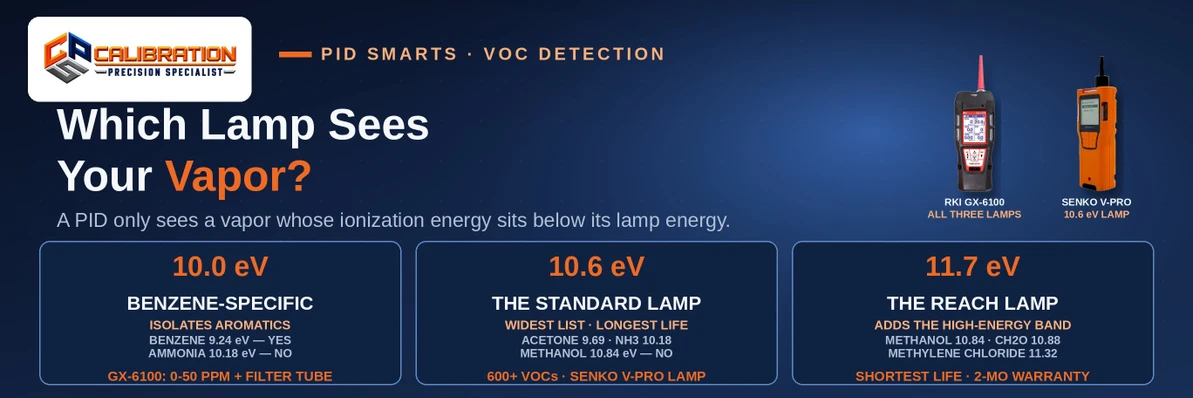
A photoionization detector (PID) can only detect a vapor whose ionization energy is below its lamp energy: a 10.0 eV lamp isolates benzene (9.24 eV) and other aromatics for benzene-specific work, a 10.6 eV lamp covers most everyday VOCs — benzene, toluene, acetone (9.69 eV), and ammonia (10.18 eV) — and an 11.7 eV lamp adds the high-energy vapors the others miss, including methanol (10.84 eV), formaldehyde (10.88 eV), and methylene chloride (11.32 eV).
A PID does not have one detection list. It has three — one per lamp — and the lamp fitted on the day decides which vapors exist as far as that instrument is concerned. A vapor the lamp cannot ionize does not read low. It reads zero, confidently, while it builds. This post is the lamp-selection reference: the one rule that governs all three lamps, the vapor-by-vapor table, what each lamp buys and what it costs, and how to pick by the vapor you actually have to see.
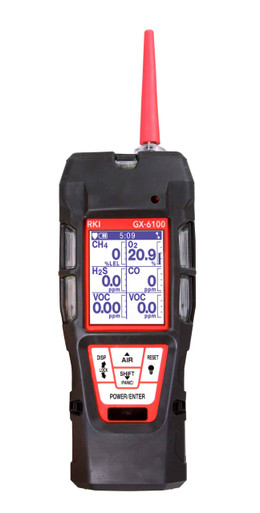
RKI GX-6100 Pumped 6-Gas Monitor – PID, VOC & Multi-Gas
Pumped 6-gas monitor whose PID channel takes all three lamp energies — 10.0, 10.6 (two ranges), and 11.7 eV.
$1,357.45–$4,425.95 configured
See the GX-6100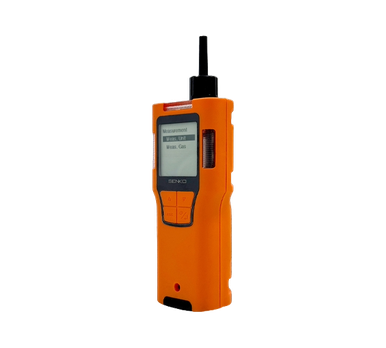
SENKO V-PRO Portable PID VOC Gas Detector
Dedicated PID VOC detector built around the 10.6 eV standard lamp — 0–4,000 ppm, or a 0–40 ppm high-sensitivity range.
$3,947–$5,011 configured
See the V-PROWhat Is the One Rule Behind Every PID Lamp?
A PID shines ultraviolet light through the sample. If a photon carries more energy than the molecule needs to give up an electron — the compound’s ionization energy, measured in electron volts (eV) — the molecule ionizes, the instrument measures the current, and a reading appears. If the photon carries less, nothing happens. No partial credit, no weak response: below the lamp energy, the vapor is visible; at or above it, the vapor is invisible.
That is why lamp choice is a selection decision, not a specification detail. You are not choosing sensitivity. You are choosing the list of chemicals your survey can find — before anyone walks into the space. The numbers that decide it are published for every compound (the NIOSH Pocket Guide lists ionization potentials), and the comparison takes seconds once you know your target vapor.
Which Vapors Can Each Lamp See?
| Vapor (ionization energy) | 10.0 eV lamp | 10.6 eV lamp | 11.7 eV lamp |
|---|---|---|---|
| Benzene (9.24 eV), toluene (8.82 eV), xylene, styrene and other aromatics | Yes — its home ground; this selectivity is the point | Yes | Yes |
| Acetone (9.69 eV) and most common solvents | Some — many everyday solvents sit above 10.0 eV and are screened out | Yes — the standard lamp’s everyday list | Yes |
| Ammonia (10.18 eV) and hydrogen sulfide (10.46 eV) | No — both sit above 10.0 eV | Yes — with high correction factors, so apply them | Yes |
| Methanol (10.84 eV) and formaldehyde (10.88 eV) | No | No — the classic 10.6 blind spot | Yes — the reason this lamp exists |
| Methylene chloride (11.32 eV), propane (11.07 eV), and other chlorinated solvents and light alkanes in the 10.6–11.7 band | No | No | Yes |
| Methane (12.51 eV) and carbon monoxide (14.01 eV) | No | No | No — no PID lamp reaches them; methane belongs to an LEL/infrared channel and CO to an electrochemical sensor |
Read the methanol row twice. Methanol is everywhere — windshield-washer and line-flush solvent, biodiesel and chemical plants, lab benches — and the standard lamp in almost every PID on the market cannot see a molecule of it. The same applies to formaldehyde in pathology, histology, and resin work. Those are not exotic edge cases; they are the two most common reasons an 11.7 eV lamp gets ordered.
What Does the 10.0 eV Lamp Buy You?
Selectivity. Benzene (9.24 eV) ionizes well below 10.0 eV, while a large share of the gasoline-range aliphatics and background solvents that crowd a general VOC reading sit above it. A lower-energy lamp therefore answers a narrower question much more cleanly: how much benzene is here? On the RKI GX-6100, the 10.0 eV PID is the benzene-specific configuration — 0–50 ppm with a pre-filter tube that scrubs interfering compounds before the sample reaches the lamp — built for the refinery, fuel-terminal, and turnaround benzene checks where the exposure limit is 1 ppm TWA and a total-VOC number is not evidence. The trade is coverage: ammonia (10.18 eV) and hydrogen sulfide (10.46 eV) disappear from the list, and many solvents go with them. A 10.0 eV lamp is a scalpel, not a survey tool.
Why Is 10.6 eV the Standard Lamp?
Because it covers the widest useful list at the longest lamp life. Benzene, toluene, xylene, acetone, gasoline vapor, most solvents, ammonia, and hydrogen sulfide all sit below 10.6 eV — which is why the GX-6100’s 10.6 eV library runs to more than 600 VOCs, in a 0–4,000 ppm range and a high-sensitivity 0–40,000 ppb range. It is also the only lamp the SENKO V-PRO runs — 0–4,000 ppm, or 0–40 ppm at 1 ppb resolution in its high-sensitivity version — a sensible single-lamp choice for general VOC monitoring. For the large majority of surveys, leak hunts, and remediation screening, 10.6 eV is the right default: broadest everyday coverage, the most correction-factor data behind it, and a lamp that lasts instead of expiring. Its blind spot is specific and knowable — the 10.6–11.7 eV band above — so check your target list against that band before you rely on it.
When Does the 11.7 eV Lamp Earn Its Short Life?
When the vapor you must see lives between 10.6 and 11.7 eV: methanol (10.84 eV), formaldehyde (10.88 eV), methylene chloride (11.32 eV), propane (11.07 eV), and a band of chlorinated solvents. On the GX-6100 the 11.7 eV PID reads 0–1,000 ppm. The cost is real and should be budgeted, not discovered: the 11.7 eV lamp’s lithium-fluoride window absorbs moisture and degrades far faster than the other lamps — RKI warrants the GX-6100’s 11.7 eV lamp for 2 months against 1 year for the PID sensor itself. Treat it as a consumable you stock for the jobs that need it, keep it dry in storage, and do not leave it fitted as the everyday lamp out of convenience. Reach is what it sells; longevity is what it charges.
How Do Humidity and Lamp Condition Change the Reading?
Every PID lamp looks at the sample through a window, and that window works in the weather the instrument works in. High humidity and dirty atmospheres foul and fog the lamp window, which dims the light, depresses response, and can make a healthy instrument read low — the fix is lamp cleaning on the maker’s schedule and a bump check against known gas, not a span adjustment to chase a dirty window. The effect is worst on the 11.7 eV lamp, whose window material absorbs moisture outright. Humidity is also one reason correction factors are lamp-specific: a factor published for a 10.6 eV lamp does not transfer to an 11.7 eV lamp, because the same vapor ionizes with different efficiency under different photon energy. Use the factor for your lamp and your maker — see PID correction factors, explained.
Which PID Lamp Should You Choose?
| Use this lamp when… | Because |
|---|---|
| 10.0 eV — benzene-specific compliance checks in refineries, fuel terminals, and turnaround work | It isolates benzene (9.24 eV) and aromatics from much of the background, and with a pre-filter tube gives a benzene number you can defend against a 1 ppm limit |
| 10.6 eV — general VOC surveys, leak investigation, remediation screening, industrial hygiene rounds | Widest everyday list (600+ VOCs on the GX-6100), longest lamp life, and the deepest correction-factor data; the only lamp on single-lamp PIDs such as the SENKO V-PRO |
| 11.7 eV — methanol, formaldehyde, methylene chloride, or chlorinated-solvent work | It is the only lamp that ionizes the 10.6–11.7 eV band at all; budget it as a short-life consumable and store it dry |
One instrument can carry the answer to more than one row: the GX-6100 accepts two PID sensors at once, so a crew can run the everyday 10.6 eV lamp alongside the 11.7 eV lamp for a methanol job instead of owning two instruments. And remember what no row fixes — methane and carbon monoxide are outside every lamp’s reach, which is why a PID complements the LEL and toxic channels rather than replacing them; see PID vs. LEL for VOC detection.
Does Lamp Choice Change Calibration?
The gas does not change — PIDs are spanned on isobutylene regardless of lamp; see calibration gas for PID instruments for the cylinder sizes and connections. What changes is everything after the span: the correction factor you apply for your target vapor is specific to the lamp energy and the maker, the lamp window needs cleaning more often in humid or dirty service, and an 11.7 eV lamp needs its output verified more often because it ages faster. CPS calibrates every channel of the instruments it sells — PID included — at calibration services in Rockwood, Tennessee.
Frequently Asked Questions
What does PID lamp energy mean?
Lamp energy is the energy, in electron volts (eV), of the ultraviolet photons a photoionization detector’s lamp produces. A vapor is detected only if its ionization energy is below the lamp energy — so a 10.6 eV lamp detects compounds under 10.6 eV and is blind to everything above it.
Can a 10.6 eV PID detect methanol?
No. Methanol’s ionization energy is 10.84 eV, above the 10.6 eV lamp’s energy, so a standard PID reads zero in methanol. Detecting methanol requires an 11.7 eV lamp.
Can any PID lamp detect methane?
No. Methane’s ionization energy is 12.51 eV, above even the 11.7 eV lamp. Methane is measured with a catalytic-bead or infrared LEL channel, not a PID.
Why use a 10.0 eV lamp if it detects fewer vapors?
For benzene selectivity. Benzene ionizes at 9.24 eV, while much of the gasoline-range background sits above 10.0 eV and is screened out — so a 10.0 eV lamp with a pre-filter tube (0–50 ppm on the RKI GX-6100) produces a benzene-specific reading instead of a total-VOC number.
Which PID lamp lasts longest?
The 10.6 eV lamp. It is the standard lamp with the longest service life. The 11.7 eV lamp is the shortest-lived — its lithium-fluoride window absorbs moisture and degrades quickly; RKI warrants the GX-6100’s 11.7 eV lamp for 2 months, against 1 year for the PID sensor.
Does an 11.7 eV lamp detect everything a 10.6 eV lamp can?
By energy, yes — every compound under 10.6 eV is also under 11.7 eV. In practice the correction factors differ by lamp, the 11.7 eV lamp ages far faster and is more humidity-sensitive, so it is the wrong everyday lamp; fit it for the high-energy vapors that require it.
Can a PID detect carbon monoxide?
No. Carbon monoxide’s ionization energy is 14.01 eV, beyond every PID lamp (10.0, 10.6, and 11.7 eV). CO is measured with an electrochemical sensor — which is why multi-gas instruments carry both technologies.
What PID lamps do the RKI GX-6100 and SENKO V-PRO offer?
The RKI GX-6100 offers four PID options — 10.6 eV in 0–4,000 ppm and 0–40,000 ppb ranges, a 10.0 eV benzene-specific sensor (0–50 ppm), and an 11.7 eV sensor (0–1,000 ppm) — and can run two PID sensors at once. The SENKO V-PRO is a 10.6 eV instrument only, in 0–4,000 ppm or high-sensitivity 0–40 ppm versions.
Does humidity affect a PID lamp?
Yes. Humidity and dirty air foul and fog the lamp window, dimming the light and depressing readings; the lamp needs cleaning on the maker’s schedule and verification against known gas. The 11.7 eV lamp is the most affected because its lithium-fluoride window absorbs moisture.
How is a PID calibrated, and does the lamp change it?
PIDs are spanned on isobutylene calibration gas at every lamp energy. What the lamp changes is the correction factor: factors are specific to the lamp energy and the instrument maker, so the factor for your target vapor must come from your maker’s chart for your lamp — never another lamp’s column.
The Bottom Line
The lamp is the detection list. A 10.0 eV lamp trades coverage for a benzene answer you can defend; a 10.6 eV lamp covers the everyday VOC world at the longest life, and it is the right default for almost every survey; an 11.7 eV lamp is the only way to see methanol, formaldehyde, and methylene chloride — and it charges you lamp life for the reach. Pick the lamp from the vapor you must see, check its ionization energy before the survey starts, and never let a confident zero from the wrong lamp stand in for clean air.
Need a calibration you can file?
In-house calibration at CPS in Rockwood, Tennessee — $55 for single-gas instruments, $90 for 4- and 5-gas — every channel, as-found and as-left data, full certificate.
See Calibration Servicesor call 865-900-8844
Recent Posts
-

How to Read a PID Correction Factor Chart
To read a PID correction factor chart, find your vapor’s row, take the factor under your own lamp en …Nov 21st 2026 -
PID Lamp Energies: 10.0 vs. 10.6 vs. 11.7 eV — Which Lamp Sees Your Vapor?
A photoionization detector (PID) can only detect a vapor whose ionization energy is below its lamp e …Nov 20th 2026 -

Catalytic Bead vs. Infrared vs. Hydrocarbon Sensors: What Can Each LEL Sensor Detect?
A catalytic bead LEL sensor detects almost any combustible gas — including hydrogen — but it needs o …Nov 19th 2026