
Blog

RKI 04 Series Calibration Service: Mail In Your Single-Gas Monitor
Mail-in calibration for an RKI 04 Series single-gas monitor costs $55 at CPS Calibrations — the published in-house rate for a single-gas instrument — and covers the monitor's one channel spanned on its own documented gas: the SC-04 toxic line (hydrogen cyanide 0–30 ppm, nitrogen dioxide 0–20 ppm, phosphine 0–20 ppm, or sulfur dioxide 0–100 ppm, each $520) or the OX-04 oxygen monitor ($205), with the as-found reading recorded before any adjustment, a sensor health check, and the monitor returned
…
Nov 1st 2026
CO2 Monitoring in Greenhouses: Enrichment Gas Where People Work
A greenhouse deliberately holds carbon dioxide at 1,000–1,500 ppm because the crop grows faster in it — and people work full shifts in that same enriched air, against OSHA's CO₂ PEL of 5,000 ppm as an 8-hour TWA (NIOSH: 30,000 ppm short-term, 40,000 ppm IDLH). Monitoring a greenhouse is therefore not about detecting a contaminant; it is about proving, continuously, that a gas you are adding on purpose stays in the band you chose — and catching the two failures that break the band: runaway inject
…
Nov 1st 2026

RAE MultiRAE Calibration Service: Mail In Your Meter
Mail-in calibration for the RAE MultiRAE costs $90 at CPS Calibrations — the published in-house rate for a 4- or 5-gas instrument, PID combinations included — and covers every channel the meter carries as configured, with the PID channel calibrated on isobutylene and its response checked, a draw check and filter inspection on the pumped sample path, as-found readings recorded before any adjustment, a sensor health check, and the meter returned with a certificate showing as-found and as-left data
…
Nov 1st 2026

Gas Detection in Ice Rinks: Ammonia, CO, and the Resurfacer
An ice rink runs two gas hazards under one roof: ammonia in the refrigeration plant — OSHA's permissible exposure limit is 50 ppm as an 8-hour TWA, and NIOSH recommends 25 ppm TWA with a 35 ppm short-term limit — and carbon monoxide from the fuel-burning resurfacer, working an enclosed sheet in front of a breathing-hard public, against a CO limit of 50 ppm TWA. The fix is two different detection jobs: fixed ammonia detection where the charge lives, and CO monitoring where the ice is made — with
…
Nov 1st 2026
What Does It Cost to Keep a 4-Gas Detector Running for Three Years?
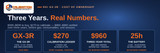
Keeping a 4-gas detector running for three years costs $860–$960 on the verified lines alone, worked on the RKI GX-3R: $590–$690 configured to buy it, plus three annual calibrations at CPS's published $90 in-house rate ($270) — before calibration gas, consumables, and the one cost years 2 and 3 hold that year 1 does not: sensors age, and a realistic three-year budget plans for it instead of being ambushed by it. The battery, by contrast, is a non-event — the GX-3R's rechargeable lithium-ion pack
…
Nov 1st 2026