
How Do You Measure Water Vapor in Natural Gas?
You measure water vapor in natural gas by drawing a measured sample of the gas through a colorimetric detector tube with a hand pump and reading the length of the color stain against the scale printed on the tube — for pipeline work the tube reads directly in pounds of water per million cubic feet (lbs/MMCF), so a NAGCO 2–10 lbs/MMCF tube and two 100 mL pump strokes tell you in minutes whether the gas meets the common 7 lbs/MMCF pipeline limit.
Water is the contaminant natural gas always carries and nobody can see. Gas leaves the wellhead saturated; dryers and separators take most of it out; what remains decides whether the gas is sellable and whether it hurts the pipe on its way to the buyer. This post covers how the field measurement actually works — the units, the four tubes that make it, the stroke counts and correction factors — and where a two-minute tube test stops and a continuous analyzer takes over.
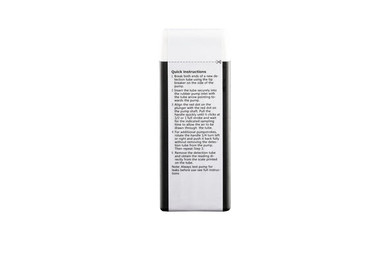
NAGCO Water Vapor (Pipeline) H2O Detector Tubes 2-10 lbs/MMCF | N10-120-10
Box of 10 direct-reading tubes that measure pipeline moisture in lbs/MMCF — the tariff's own units.
$49
See the pipeline tubesWhy Does Water in Natural Gas Matter?
Three problems, all expensive:
- Hydrates. Under pressure and low temperature, water and natural gas form ice-like crystalline solids that can plug valves, regulators, and sections of line. A hydrate plug in a cold spot is a shutdown and a hazardous clearing job, not an inconvenience.
- Corrosion. Free water plus the CO2 and H2S that ride along in raw gas makes an acid that eats carbon steel from the inside — the failure mode you cannot inspect from outside the pipe.
- Rejection. Pipeline tariffs specify a maximum water content, and 7 lbs/MMCF is the common cap. Gas measured wetter than the tariff at a custody-transfer point can be refused — the producer keeps the gas and loses the sale.
That is why the measurement exists at all: it is a pass/fail check against a number written into a contract, made at a sample point, by whoever is standing there. Detector tubes are built for exactly that shape of job.
Lbs/MMCF vs. mg/L: Two Scales for the Same Water
Water vapor tubes come printed in two different unit systems, and picking the wrong one is the most common buying mistake in this category:
- lbs/MMCF — pounds of water per million cubic feet of gas. This is the language of U.S. pipeline tariffs, gas contracts, and dryer specifications. If your spec sheet says 7, your tube should say lbs/MMCF.
- mg/L — milligrams of water per liter of gas, the metric scale used in much process and international work.
They convert by simple arithmetic: 1 mg/L is 1 gram per cubic meter, and a million cubic feet is 28,316.8 cubic meters, so 1 mg/L ≈ 62.4 lbs/MMCF — and the 7 lbs/MMCF pipeline limit is only about 0.11 mg/L. That one conversion explains the whole product line: the metric 1–18 mg/L tube covers gas that is soaking wet by pipeline standards (62–1,100+ lbs/MMCF), while checking a 7 lb limit takes either a tube printed in lbs/MMCF or the low-range 0.05–1 mg/L tube. Every water vapor tube CPS carries is in the water vapor tube category.
Which Water Vapor Tube Do You Need?
All four are NAGCO, all are $49 a box of 10 ($4.90 a test), and all run on the same PP-2025 hand pump:
| Tube | Standard range | Sample | Best for |
|---|---|---|---|
| Pipeline N10-120-10 | 2–10 lbs/MMCF | 2 strokes / 200 mL | Checking gas against the 7 lb tariff limit |
| Pipeline N10-120-20 | 6–40 lbs/MMCF | 1 stroke / 100 mL | Wet gas — wellhead, gathering, dryer troubleshooting |
| Metric N10-120-40 | 1–18 mg/L | 1 stroke / 100 mL | Metric-spec process gas, very wet streams |
| Low-range N10-120-30 | 0.05–1 mg/L | 100 mL | Verifying very dry gas in metric units — brackets the 0.11 mg/L equivalent of 7 lbs/MMCF |
Each tube also stretches past its printed range by changing the stroke count and applying the published correction factor. The 2–10 lbs/MMCF tube reads 1–5 lbs/MMCF on four strokes (factor 0.51) and 4–20 on one stroke (factor 2.22); the 6–40 tube reads 3–20 on two strokes and 12–80 on a half stroke. One box therefore covers both the compliance check and the "how wet is it really" reading on either side of it.
Use this when: the gas should be near spec and the question is pass/fail — take the 2–10 tube. The gas is known wet, the dryer is suspect, or you are working upstream of treatment — take the 6–40. Your paperwork is metric — take the metric tube that brackets your number, which for pipeline-dry gas is the low-range tube, not the 1–18.
How the Measurement Works, Step by Step
The procedure is the standard detector-tube method, with the water vapor specifics that decide whether the number is real:
- Leak-check the pump. Seat an unbroken tube, pull a stroke, and confirm the pump holds vacuum. A leaking pump under-draws the sample and reports the gas drier than it is — the worst direction to be wrong when the reading clears gas for sale.
- Break both tips and seat the tube, arrow toward the pump, connected to the sample point so you draw pipeline gas, not room air.
- Pull the strokes for the range you want. The PP-2025 draws 100 mL on a full stroke and 50 mL on a half stroke, with an end-of-flow indicator and a stroke counter. The standard 2–10 lbs/MMCF measurement is two full strokes.
- Respect the sampling time — it is shorter in natural gas. The 2–10 tube specifies 45 seconds per stroke in natural gas against 1.5 minutes per stroke in air. Rushing the draw is how a stain comes up short.
- Read the stain at its end point against the printed scale, at eye level, in good light. The pipeline tubes change yellow to green (the 6–40 to dark green).
- Apply the temperature correction. Water vapor readings shift with temperature and NAGCO prints the factors on the tube's data: for the 2–10 tube, multiply by 1.1 at 32°F (0°C), 1.0 through the middle of the range, 0.9 at 104°F (40°C). The 6–40 tube swings wider — 1.3 at freezing down to 0.74 at 104°F — so on a cold morning an uncorrected reading can be off by nearly a third.
Used tubes are spent reagent in broken glass; dispose of them under your site's rules. Unused pipeline tubes keep for 2 years stored dark at 40–77°F (refrigeration preferred); the metric and low-range tubes keep for 1 year.
How Accurate Is a Water Vapor Tube — and When Is It Not Enough?
The pipeline tubes carry a precision of ≤ ±12% relative standard deviation; the metric 1–18 mg/L tube is ≤ ±20%. At the 7 lb decision point, ±12% means a reading of 7 could be gas truly running about 6.2 to 7.9 — close enough to run a dryer, flag a trend, and decide whether gas ships, not close enough to settle a disputed custody measurement to the decimal. Know the interferences, too: NAGCO documents ammonia producing a significant apparent reading on the 6–40 tube, and amines and alcohols as possible interferences — relevant in treated gas, where amine carryover is a real event.
So the honest division of labor: a tube is the right tool for spot checks — dryer outlet verification, after-upset checks, wellhead and gathering readings, confirming a fixed analyzer that suddenly looks wrong. Continuous duty belongs to an installed moisture analyzer at custody points that must be watched around the clock. The tube's advantages are the ones that keep it in the truck: no power, no calibration, no warm-up, $4.90 a measurement, and a reading in the tariff's own units. The full tube lineup — 31 tubes beyond water vapor, from H2S to benzene to mercaptans — is in our gas detection tubes category, and the method behind all of them is covered in what gas detection tubes are and when to use them.
Frequently Asked Questions
How do you measure water vapor in natural gas?
Draw a measured sample of the gas through a colorimetric detector tube with a hand pump and read the length of the color stain against the scale printed on the tube. For pipeline work the tube reads directly in lbs/MMCF: the standard check is two 100 mL strokes through a NAGCO 2–10 lbs/MMCF tube, about 45 seconds per stroke in natural gas, then a temperature correction from the tube's data sheet.
What is the water content limit for pipeline natural gas?
7 lbs/MMCF — seven pounds of water per million cubic feet of gas — is the common maximum written into U.S. pipeline tariffs. Gas measured wetter than the tariff limit at a custody-transfer point can be rejected. Individual tariffs vary, so check the number in your own contract; the measurement method is the same whatever the cap.
What does lbs/MMCF mean?
Lbs/MMCF is pounds of water per million cubic feet of gas — a mass-per-volume measure of how much water vapor the gas carries. It is the standard unit for U.S. natural gas moisture specifications, dryer ratings, and pipeline tariffs, which is why pipeline detector tubes are printed in it: the reading compares directly to the contract number with no conversion.
How many pump strokes does a water vapor tube take?
It depends on the tube and the range. The NAGCO 2–10 lbs/MMCF pipeline tube uses 2 strokes (200 mL) for its standard range, 4 strokes to read 1–5 lbs/MMCF, and 1 stroke to read 4–20. The 6–40 lbs/MMCF tube uses 1 stroke standard. Changing the stroke count changes the range, and each alternate range carries its own published correction factor.
How long does a water vapor tube test take?
Minutes. The standard 2–10 lbs/MMCF measurement draws 2 strokes at 45 seconds per stroke in natural gas — under two minutes of sampling — plus reading the stain and applying the temperature correction. The same tube in air specifies 1.5 minutes per stroke. There is no warm-up, no calibration, and no lab wait; the answer exists at the sample point.
Can you convert mg/L to lbs/MMCF?
Yes — multiply mg/L by about 62.4. One mg/L is one gram per cubic meter, and a million cubic feet is 28,316.8 cubic meters, so 1 mg/L ≈ 62.4 lbs/MMCF. Working the other way, the 7 lbs/MMCF pipeline limit is only about 0.11 mg/L, which is why verifying pipeline-dry gas with a metric tube requires the low-range 0.05–1 mg/L tube.
Which water vapor tube do I need for pipeline gas?
For a pass/fail check against the common 7 lbs/MMCF limit, the NAGCO N10-120-10 (2–10 lbs/MMCF, $49) — its standard range brackets the limit. For wet gas, wellhead and gathering work, or dryer troubleshooting, the N10-120-20 (6–40 lbs/MMCF, $49). Both run on the same PP-2025 hand pump and stretch past their printed ranges with alternate stroke counts.
Do water vapor tubes need temperature correction?
Yes. Temperature changes the reading and each tube's data sheet prints its factors. The 2–10 lbs/MMCF tube corrects by 1.1 at 32°F and 0.9 at 104°F; the 6–40 tube by 1.3 at 32°F and 0.74 at 104°F. Skipping the correction on a cold morning can leave a reading off by nearly a third on the wider-swinging tube — measure the gas temperature and apply the factor.
How accurate is a water vapor detector tube?
NAGCO specifies the pipeline water vapor tubes at ≤ ±12% relative standard deviation and the metric 1–18 mg/L tube at ≤ ±20%. At a 7 lbs/MMCF reading, ±12% is roughly 6.2 to 7.9 lbs/MMCF in true value — accurate enough for dryer checks, trending, and ship/don't-ship decisions at the sample point, not a substitute for a custody analyzer in a disputed measurement.
How much does it cost to test water vapor in natural gas with tubes?
$4.90 a test in consumables: the NAGCO water vapor tubes are $49 for a box of 10. The one-time hardware is the PP-2025 Hand Pump Kit at $395 (pump, zippered case, and rebuild kit, with a limited lifetime warranty on the pump). There is no calibration cost, no power, and no service contract — a tube is spent after one measurement, and the pump serves the entire tube line.
The Bottom Line
Measuring water vapor in natural gas is a two-minute, $4.90 tube test: pull two 100 mL strokes of pipeline gas through a tube printed in lbs/MMCF, read the stain, correct for temperature, and compare the number directly to the 7 lbs/MMCF limit in your tariff. Pick the 2–10 tube to check gas that should be dry, the 6–40 to measure gas that is wet, and the low-range metric tube when your paperwork runs in mg/L — and reserve the continuous analyzer for custody points that cannot go unwatched. CPS Calibrations in Rockwood, Tennessee stocks the full NAGCO tube line and the PP-2025 pump, and calibrates the electronic monitors that work alongside them — every channel, as-found and as-left, with a full certificate.
Need a calibration you can file?
In-house calibration at CPS in Rockwood, Tennessee — $55 for single-gas instruments, $90 for 4- and 5-gas — every channel, as-found and as-left data, full certificate.
See Calibration Servicesor call 865-900-8844
Recent Posts
-

What Is Remote Monitoring for Fixed Gas Detection?
Remote monitoring for fixed gas detection means a fixed system's live readings, trends, and alarm hi …Nov 23rd 2026 -

What Are the Key Differences Between the GX-6000 and GX-6100?
The RKI GX-6100 is the current replacement for the discontinued GX-6000: both are pumped 6-gas monit …Nov 22nd 2026 -

How to Read a PID Correction Factor Chart
To read a PID correction factor chart, find your vapor’s row, take the factor under your own lamp en …Nov 21st 2026