
Blog
How Many Calibrations Do You Get From a 34L, 58L, or 103L Cylinder?
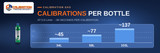
At the common 0.5 L/min fixed flow rate, a 34L cylinder holds 68 minutes of gas flow, a 58L holds 116 minutes, and a 103L holds 206 minutes — so at 90 seconds of gas per calibration, that works out to about 45 calibrations from a 34L, 77 from a 58L, and 137 from a 103L. Those are ideal counts: real life lands below them, because a fixed-flow regulator flows the whole time it is open, tests get repeated, and the last gas in the cylinder is not all usable.
That is the short version. The rest
…
Oct 20th 2026

SENKO Fixed Gas Detectors: Which SI-Series Monitor Does Your Facility Need?
SENKO's fixed gas detectors come down to one question — how does the gas reach the sensor? The SI-200E (from $950) is an explosion-proof diffusion detector, ATEX/IECEx rated and IP66, that continuously watches the air around it for oxygen, toxic and combustible gases. The SI-301 (from $1,800) is an explosion-proof sampling detector (IP65) whose built-in pump pulls gas through up to 30 m of tubing from the point that matters into a cartridge sensor. The SI-H100 (from $1,518) is a sample-dra
…
Oct 20th 2026
CGA-330 vs. CGA-600: Which Regulator Fitting Does Your Cylinder Need?
On CPS's ISG calibration gas cylinders, the fitting follows the cylinder, not the gas: the steel 17L and 34L cylinders take a CGA-600 regulator, the steel 103L and the aluminum cylinders (34L–120L) take a C-10 regulator, and CGA-330 fits neither — it is a gas-specific outlet for large cylinders, served at CPS by the R-DF330 demand-flow regulator at $375. If you are outfitting a standard calibration cylinder, your real choice is CGA-600 vs. C-10, and the cylinder's size, material, and
…
Oct 20th 2026

What Is the SENKO SI-H100? A Sample-Draw Fixed Gas Detector Explained
The SENKO SI-H100 is a fixed, wall-mounted sample-draw gas detector head — $1,380 to $1,840 at CPS depending on the sensor fitted — whose built-in pump pulls a gas sample at 500 mL/min through up to 30 m (about 100 ft) of tubing to a replaceable sensor cartridge inside the unit, so one gas can be monitored continuously at a point nobody can stand next to. The cartridge is chosen from 56 orderable options dominated by semiconductor specialty gases — arsine (0–400 ppb), pho
…
Oct 20th 2026
What Does LEL Mean? Percent LEL Explained
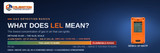
LEL stands for Lower Explosive Limit — the lowest concentration of a flammable gas in air that can ignite — and a reading in %LEL tells you what fraction of that limit is present. For methane, whose LEL is 5% by volume, 100% LEL means 5% gas in air (50,000 ppm), 50% LEL means 2.5% gas, and the familiar 10% LEL first alarm means just 0.5% gas — one-tenth of the way to an ignitable atmosphere.
That one idea — %LEL is a fraction of a gas-specific limit, not a concentration i
…
Oct 20th 2026